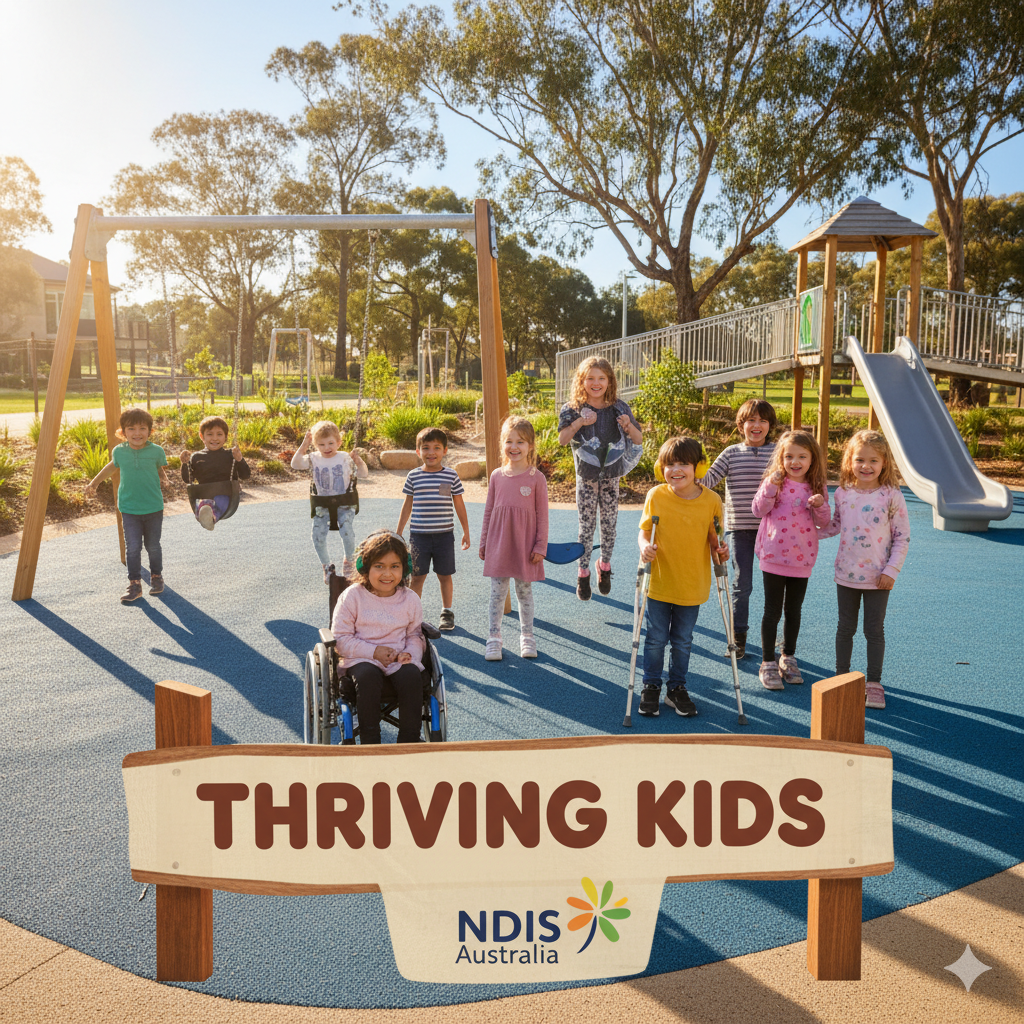
Thriving Kids is a new Australian Government initiative to deliver early, practical supports for children aged 8 and under with developmental difference, delay or disability who have low to moderate support needs. It is designed to provide help outside the NDIS so families can access local, evidence-based services earlier, while the NDIS remains focused on children with significant and permanent disability. First services are expected from 1 July 2026, with broader NDIS access changes planned from mid-2027 (phased rollout). Parents should expect careful transition planning and no blanket removals of support. Source; Fact sheet; NDIS legislation summary.
What is Thriving Kids?
Thriving Kids will scale mainstream and community services families already use (child health, GPs, early learning, schools, digital supports) to create a national, connected system for early intervention. Children with higher needs will continue in the NDIS. Program design is being finalised by the Commonwealth with states and territories, guided by an expert Advisory Group and a parliamentary inquiry. Details; Fact sheet PDF.
- Age focus: Children 0–8 years with developmental difference, delay or disability and low–moderate needs.
- Setting: Local services close to home, integrated with health, education, and community supports.
- NDIS interface: Kids with significant and permanent disability still access the NDIS; foundational supports sit outside it. Q&A.
Key dates parents should know
- Now–2025: Design and consultation continue; Advisory Group communiqués published. Advisory Group.
- 1 July 2026: First services expected; phased national rollout over ~12 months. Fact sheet.
- Mid-2027: Broader NDIS access changes expected to commence; transitions planned. Fact sheet.
Will my child lose NDIS funding?
No automatic cut-offs. The Government states existing NDIS participants will continue to receive supports, with usual reassessments and careful transition planning. Some cohorts may have eligibility reassessment triggered by Rules (e.g., when a child turns 9), but timing is to be confirmed. Thriving Kids fact sheet; NDIS legislative changes.
- If your child has high needs or a listed condition that typically meets NDIS disability requirements, ongoing NDIS access is expected, subject to standard reviews. See NDIA “List A” and “List D” guidance. List A overview; Applying to the NDIS (Dec 10, 2024).
- If your child has low–moderate needs (many autistic children fall here), supports may be delivered via Thriving Kids outside the NDIS, reducing wait and improving local access. Q&A.
Who is unlikely to be affected?
Children whose diagnoses and functional impact typically meet NDIS disability requirements under NDIA Lists (e.g., Down syndrome, severe cerebral palsy at GMFCS III–V, moderate–profound intellectual disability) are likely to remain NDIS-eligible, with standard reviews. Always check the latest NDIA lists and evidence rules.
- Examples: Down syndrome (List A and List D for <7), severe CP, moderate–profound intellectual disability. Applying to the NDIS (Lists A & D); Eligibility FAQ.
What will Thriving Kids actually fund?
Final service menus are in development, but the program is explicitly about earlier identification and evidence-based supports delivered through mainstream settings. Expect scaled supports across child and family health, primary care, early learning, schools, and digital services. Fact sheet.
- Likely focus areas: parent coaching, developmental monitoring, targeted early-years interventions, navigation to local supports, and inclusion supports in early learning and school settings.
- NDIS remains for: children with significant and permanent disability support needs. Q&A.
How does this interact with autism supports?
In parallel, Australia’s National Autism Strategy 2025–2031 sets a national approach to inclusion, information, and services for autistic people. For many autistic children with lower support needs, Thriving Kids is expected to provide earlier, local supports; autistic children with higher needs should continue within the NDIS. Strategy overview; Strategy publication.
Common parent questions
- Will funding stop suddenly? No. Transitions are planned. Existing participants keep supports with normal reassessments. Fact sheet.
- Could my child be reassessed? Yes. Legislation allows eligibility reassessments for certain cohorts (e.g., around age 9). Timing depends on future Rules. NDIS changes.
- What if supports shift outside the NDIS? Your child would access local foundational supports through Thriving Kids; therapy intensity and pathways will be set in the final program design. Program page.
- Who decides eligibility? The NDIA applies the Act, Rules and Our Guidelines using Lists A/B/D and functional evidence. Our Guidelines.
What you can do now
- Keep evidence current: diagnosis letters, functional assessments, therapy reports aligned to NDIA evidence requirements. Evidence guide.
- Know your lists: If your child’s condition appears on List A (disability) or List D (under 7 early intervention), eligibility pathways are clearer. Applying to the NDIS (Lists).
- Plan for either pathway: NDIS for high needs; Thriving Kids for low–moderate needs with local supports.
- Stay informed: We update this page after major announcements.
Uncertainties to note
Final service menus, referral pathways, and some eligibility-reassessment triggers will be settled in 2025–2026 through Commonwealth–state agreements and NDIA Rules. Published timelines indicate first services from 1 July 2026 and NDIS access changes from mid-2027, but phasing can shift. Always check the latest government pages linked below.
About the author
Nikkita Wallace — Senior Speech Pathologist with 15 years’ experience supporting Brisbane children with complex communication needs. Registered speech pathologist/therapist working across the NDIS, public sector, hospitals, schools, and Medicare pathways.
References (APA style)
- Australian Government Department of Health, Disability and Ageing. (2025, October 17). Thriving Kids – Fact sheet. https://www.health.gov.au/resources/publications/thriving-kids-fact-sheet
- Australian Government Department of Health, Disability and Ageing. (2025, November 4). Thriving Kids. https://www.health.gov.au/our-work/thriving-kids
- Australian Government Department of Health, Disability and Ageing. (2025, October 17). Thriving Kids – Questions and answers. https://www.health.gov.au/resources/publications/thriving-kids-questions-and-answers
- National Disability Insurance Agency. (2025, October 24). Our Guidelines. https://www.ndis.gov.au/our-guidelines
- National Disability Insurance Agency. (2024, December 10). Applying to the NDIS [PDF with Lists A & D]. https://www.ndis.gov.au/media/7752/download
- National Disability Insurance Agency. (2024, October 3–2025). Summary of legislation changes. https://www.ndis.gov.au/changes-ndis-legislation/summary-legislation-changes
- Department of Social Services. (2025, January 14). National Autism Strategy 2025–2031. https://www.dss.gov.au/national-autism-strategy
Staying up to date
We will keep this blog updated whenever major announcements about Thriving Kids or NDIS access are released. Last updated: 6 November 2025 (AEST).
Contact me at 0432 309 882 or admin@leaptherapy.com.au for support, second opinions, or report preparation.
::contentReference[oaicite:0]{index=0}