What Is a Multidisciplinary Approach?
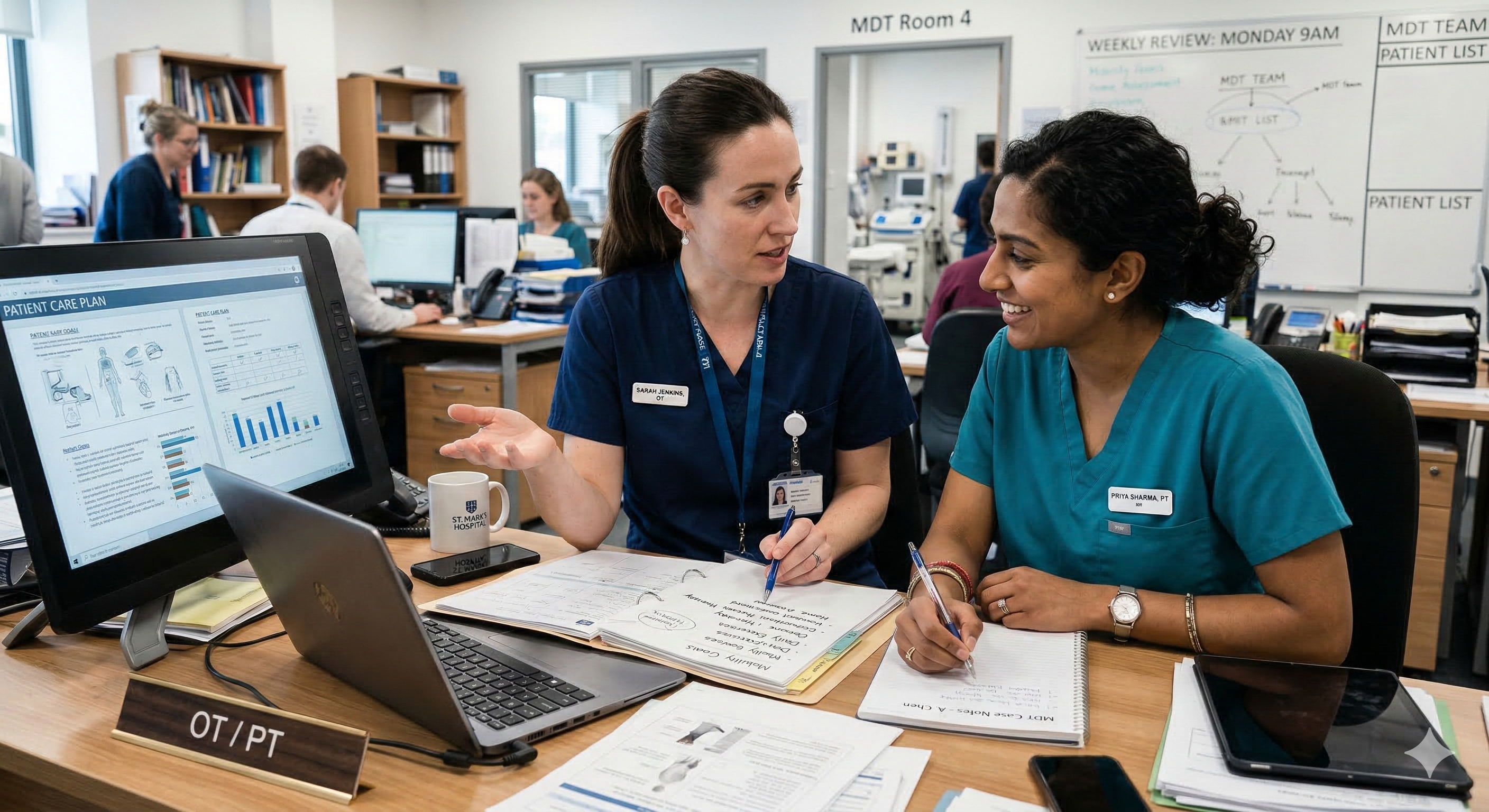
A multidisciplinary approach means professionals from different therapy disciplines work together as a coordinated team. Rather than seeing a speech therapist and an occupational therapist who operate independently, a multidisciplinary team shares information, aligns goals, and plans therapy that works in harmony.
At LEAP Therapy, our speech therapists and occupational therapist collaborate closely on every shared client. We meet regularly, discuss progress together, and ensure that what happens in one session reinforces what happens in another.
Why a Whole-Picture Approach Matters
Children do not develop in silos. A child who struggles with sensory processing may also have difficulty with communication. A child working on fine motor skills for handwriting may also need support with the language skills required for written expression. Development is interconnected, and therapy should be too.
Research consistently supports this. A 2017 systematic review published in the Journal of Interprofessional Care found that collaborative, team-based therapy led to improved functional outcomes for children with developmental needs compared to siloed service delivery. Similarly, the American Journal of Occupational Therapy has highlighted that children receiving coordinated speech and occupational therapy services show faster progress in both communication and daily living skills, because gains in one area reinforce the other.
When therapists work in isolation, families can end up with conflicting advice, duplicated goals, or gaps in support. A coordinated approach eliminates these problems by ensuring everyone is on the same page.
Not Industry Standard ÔÇö But It Should Be
In most therapy settings, speech therapists and occupational therapists work for different practices. They may never speak to each other, let alone plan together. Families are left to relay information between providers, and therapy goals can pull in different directions without anyone realising.
A truly integrated multidisciplinary approach is not the industry standard. It requires therapists who work under the same team, share the same values, and commit to regular collaboration. At LEAP Therapy, we have built our practice specifically to deliver this. Our experience working with complex cases and our specialisation in paediatric therapy means we understand the value of joined-up care and have the structure in place to make it happen.
This is a deliberate choice. We believe families deserve better than the fragmented model that most providers offer, and the results speak for themselves.
Key Benefits for Your Child
- Coordinated goals: Our team creates unified therapy plans so every session builds on the last, regardless of which therapist your child sees. For example, if your child is working on requesting (a speech goal) and hand strength (an OT goal), we might combine these by practising requests during a play-based fine motor activity.
- Faster progress: When therapists reinforce each other's strategies, children get more consistent practice. A sensory regulation strategy introduced by our occupational therapist can be carried into speech therapy sessions, helping your child stay focused and engaged for better communication outcomes.
- Less repetition for families: Instead of explaining your child's history to multiple separate providers, you work with one team that already knows your child. We share information internally (with your consent), so you spend less time repeating yourself and more time focusing on what matters.
- Better generalisation: Research in developmental psychology shows that children transfer skills more effectively when they experience consistent strategies across contexts. When our therapists use the same language, expectations, and approaches, your child finds it easier to apply new skills in different settings.
- Streamlined NDIS reporting: Coordinated reporting from a unified team paints a clearer picture of your child's progress. Our therapists align their reports and recommendations, which supports stronger outcomes at plan reviews.
Beyond Our Team: Working with Your Child's Wider Network
A multidisciplinary approach does not stop at our front door. Many of the children we work with also see paediatricians, psychologists, physiotherapists, support workers, and educators. We actively liaise with these external professionals to make sure your child's care is truly coordinated.
This might look like:
- Sharing progress updates and therapy goals with your child's paediatrician so medical and therapeutic care align
- Coordinating with psychologists on behavioural strategies that support both emotional regulation and communication
- Working alongside physiotherapists when gross motor development impacts your child's ability to participate in daily activities
- Briefing support workers on the strategies we use in sessions so they can reinforce skills during community access and daily routines
- Collaborating with teachers and educators to ensure therapy goals carry into the classroom
This whole-network approach means your child is not just supported in therapy sessions ÔÇö they are supported consistently across every part of their day. Research from the Early Childhood Research Quarterly has shown that children whose therapy teams communicate with educators and caregivers achieve significantly better developmental outcomes than those receiving therapy in isolation.
When Is This Approach Most Helpful?
While any child can benefit from coordinated therapy, a multidisciplinary approach is particularly valuable for children with:
- Autism spectrum disorder ÔÇö where communication, sensory processing, and motor skills often intersect
- Developmental delays ÔÇö where multiple areas of development need support simultaneously
- Down syndrome ÔÇö where speech, fine motor, and sensory needs frequently overlap
- Complex or multiple diagnoses ÔÇö where coordinated care prevents gaps and contradictions
- School readiness concerns ÔÇö where handwriting, language, attention, and social skills all need to come together
Getting Started
If you think your child could benefit from a multidisciplinary approach, we would love to chat. Whether your child needs speech therapy, occupational therapy, or both, our team can help you work out the best path forward.
Contact us today to discuss your child's needs, or call us on 0432 309 882. You can also learn more about our full range of therapy services.